OpenSpeedy - v1.7.6
Free and Open-Source Game Speed Controller, Also Accelerates Baidu Netdisk!

Hard Drive Speed Testing Tool
17MB2 Already downloaded Mobile view
CrystalDiskMark is a simple and freehard drive read/write speed testing tool . You can use it to test whether your new hard drive meets the speed expectations!
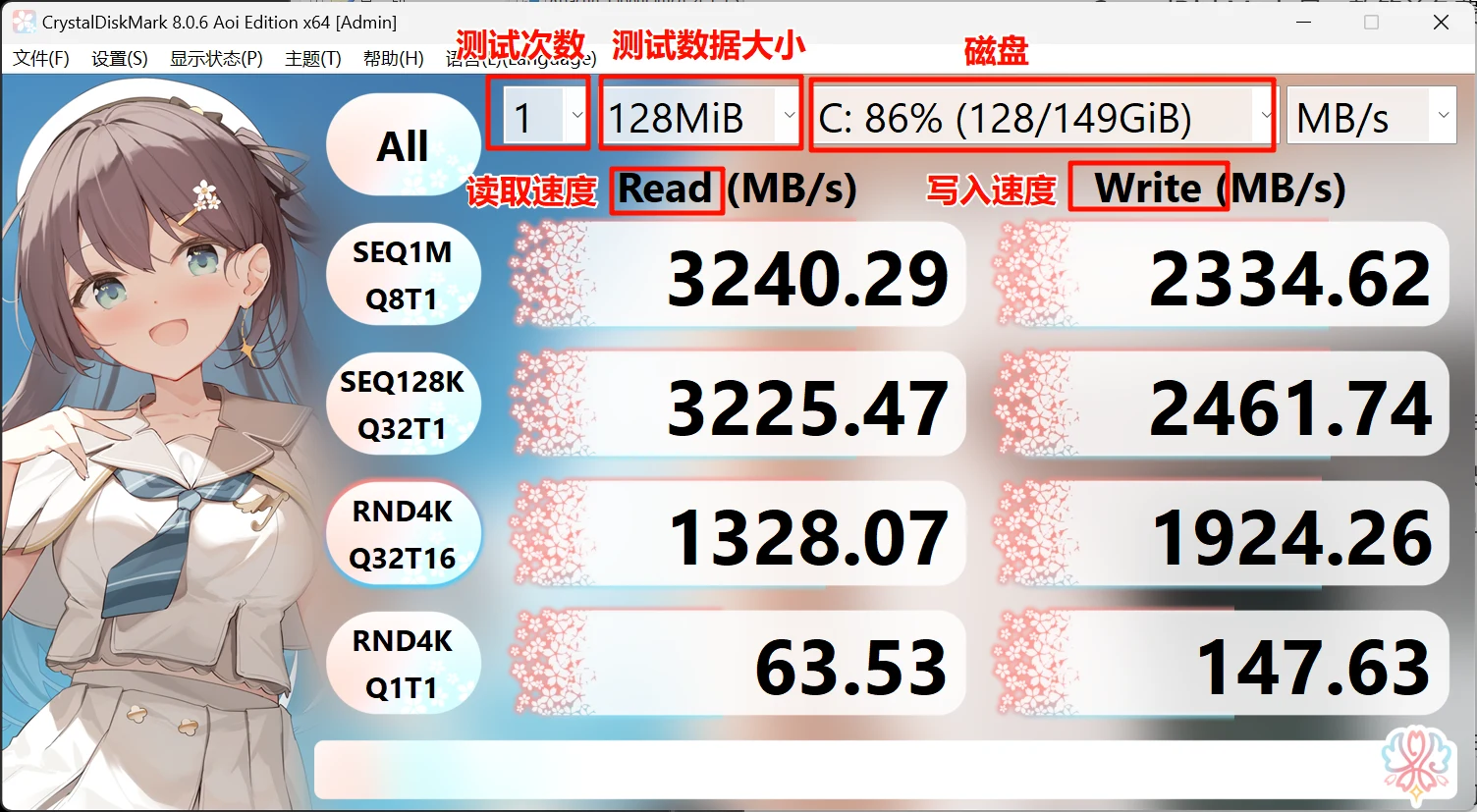
The software supports Simplified Chinese. If you download the installer version, select English during installation, and it will display in Chinese by default afterwards.
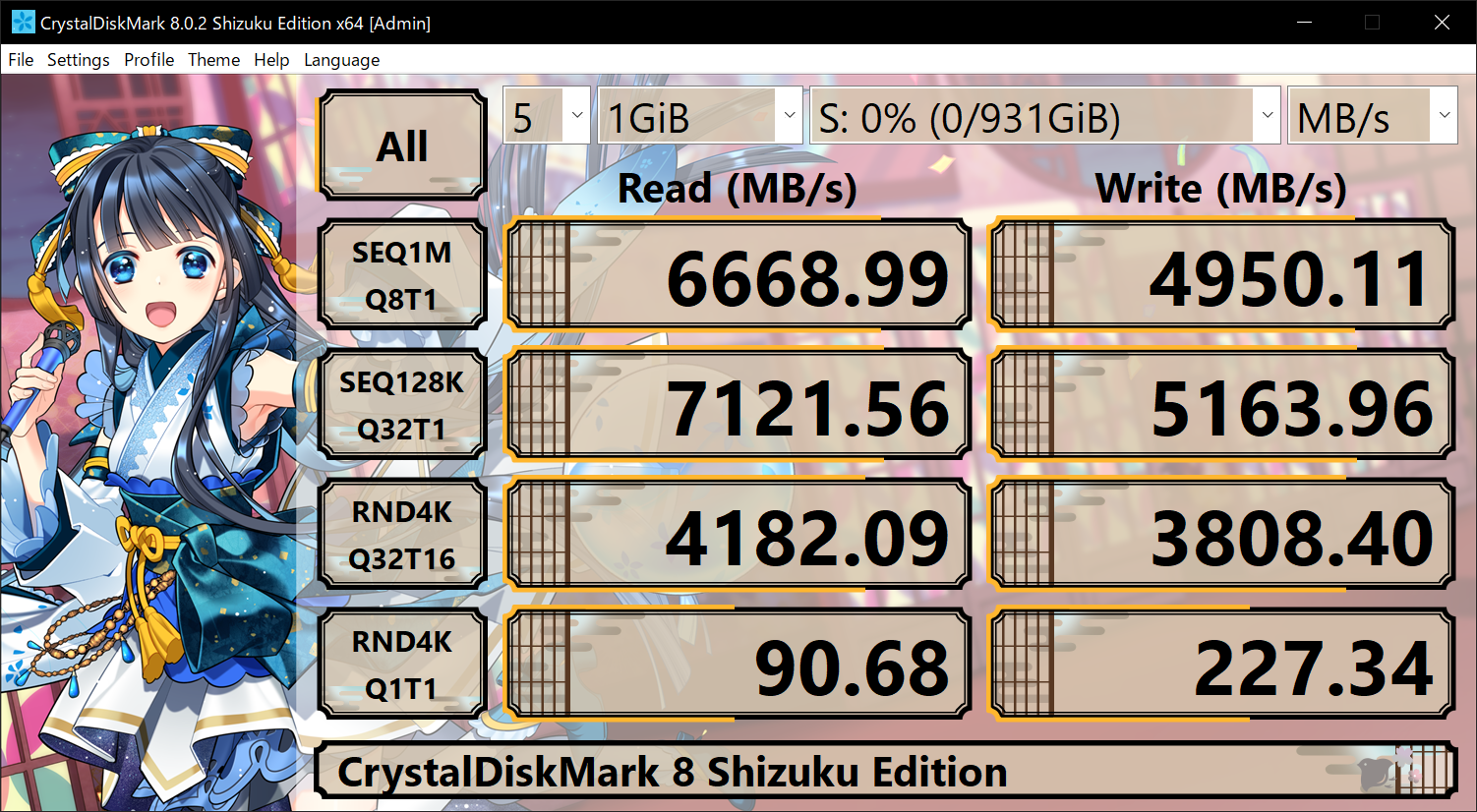
CrystalDiskMark has many different themed versions. I’ve provided two versions here, both anime-themed and quite nice: Aoi and Shizuku.
Below is an explanation of technical terms in the software to help you understand the test data.
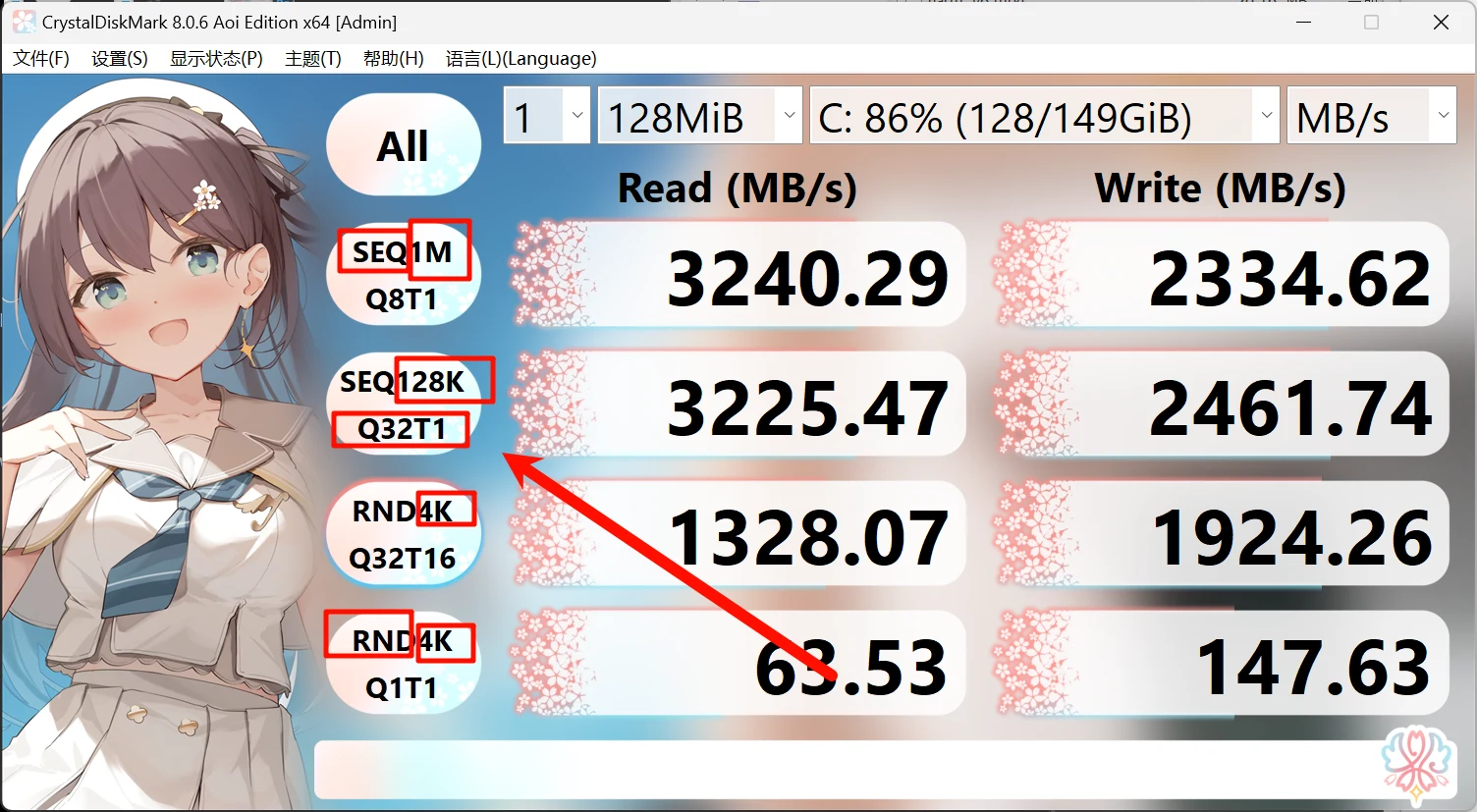
SEQ (Sequential): The SEQ test mode evaluates disk performance in sequential data transfer. In the SEQ test, CrystalDiskMark writes or reads continuous blocks of data to measure sequential read/write speeds. This test is typically suitable for applications requiring large continuous data transfers, such as reading or writing large files. SEQ test results show how fast the disk can read and write data sequentially.
RND (Random): The RND test mode evaluates disk performance when handling small files or random access. In the RND test, CrystalDiskMark writes or reads random small blocks of data to simulate real-world random read/write operations. This test is typically suitable for applications that frequently access small files or perform random access, such as database operations or OS disk access. RND test results show how fast the disk handles small files or random access.
Q: Queue Depth
T: Thread
4K, 128K, 1M represent different block sizes used to evaluate different aspects of disk read/write performance:
4K: The 4K block size (4KB) is primarily used to evaluate disk performance when handling small files or performing random read/write operations. In modern computer systems, many applications and the OS frequently read/write small files, so the 4K test is a common performance benchmark.
128K: The 128K block size (128KB) is primarily used to evaluate disk performance when handling medium-sized files or performing sequential read/write operations. In certain scenarios, such as large file transfers or multimedia editing, 128K block size is more common.
1M: The 1M block size (1MB) is primarily used to evaluate disk performance when handling large files or large block data transfers. In certain scenarios, such as video editing or data backup, 1M block size may be more applicable.