TinyPlay - 1.0
Play videos on a computer connected to a TV and control them from a phone browser.

A multilingual speech recognition, translation, and language identification model that can run locally.
Depending on the model selected0 Already downloaded Mobile view
Whisper is a general-purpose speech recognition model released by OpenAI. It can perform multilingual transcription, language identification, and speech translation, and can run on local computers or servers. It is more like a set of models and command-line tools; a graphical interface for general users needs to be provided by other projects.
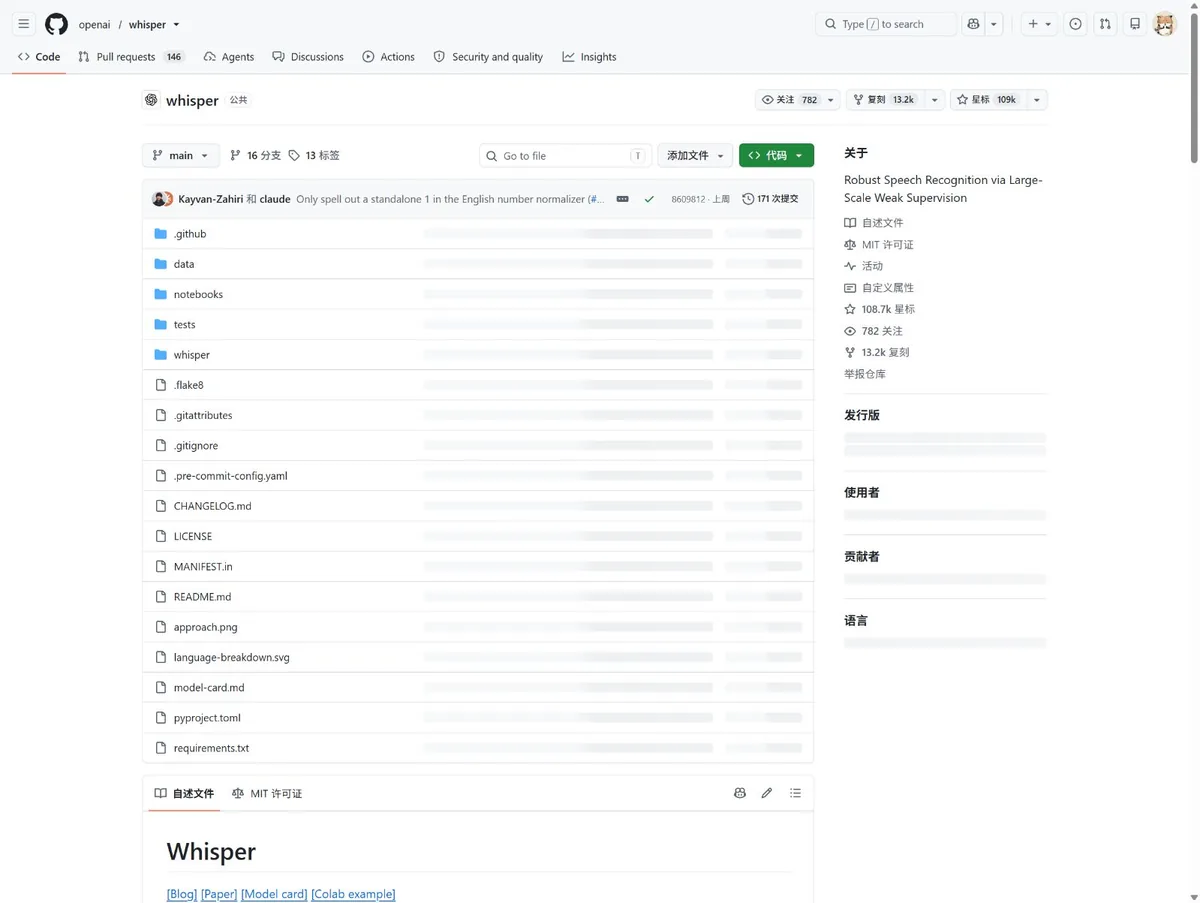
Whisper can transcribe audio into text, automatically detect the language, and translate speech in multiple languages into English. The official release offers models ranging from tiny to large, plus a faster turbo model. Larger models generally recognize more accurately, but they require more GPU memory and take longer to run.
Before installation, you need to prepare Python and FFmpeg, and then install openai-whisper via pip. You can specify the audio file and model directly on the command line. The official GPU memory requirements range from roughly 1 GB to 10 GB; the turbo model needs about 6 GB. Without a dedicated GPU, you can still try CPU inference, but processing long audio will take more time.
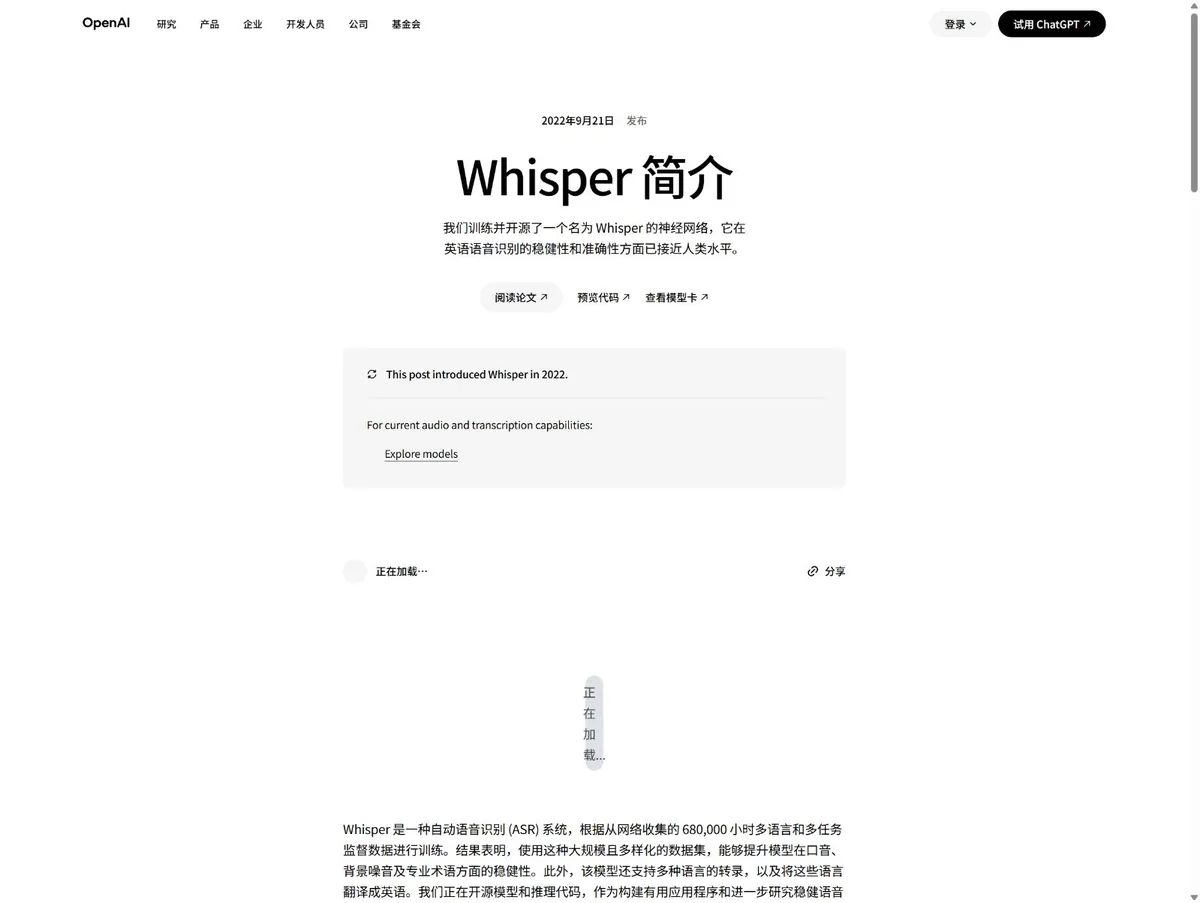
It is well suited to generating video subtitles, organizing interview recordings, transcribing meeting content, and building audio search indexes. Recording quality, background noise, accents, and specialized terminology all affect the results. Important subtitles and published transcripts still need manual proofreading, especially for personal names, numbers, and proper nouns.
Whisper’s code and model weights are released under the MIT license, so they can be used and modified for free. Running locally is not billed per minute; the main costs are equipment, storage, and computing time. When integrating it into an online service, you also need to handle the privacy, authorization, and retention period of uploaded audio yourself.
The latest verifiable release is 20250625, published on June 26, 2025. Whisper’s strengths are its mature models, broad language coverage, and rich ecosystem. The installation dependencies and command-line workflow raise the entry barrier for ordinary users, and when choosing a third-party graphical interface you also need to verify its source separately.