
Plausible - 3.2.1
A lightweight, privacy-friendly website analytics tool with a self-hostable Community Edition.

An open-source UI design, prototyping, and developer collaboration platform built on open web standards.
Based on Docker Mirror0 Already downloaded Mobile view
Penpot is a UI design and prototyping collaboration platform that runs in the browser. Designers can draw interfaces, build components, and create interactive prototypes, while developers can view dimensions, styles, and code-related information. The project emphasizes open standards, with files and outputs centered around SVG, CSS, HTML, and JSON.
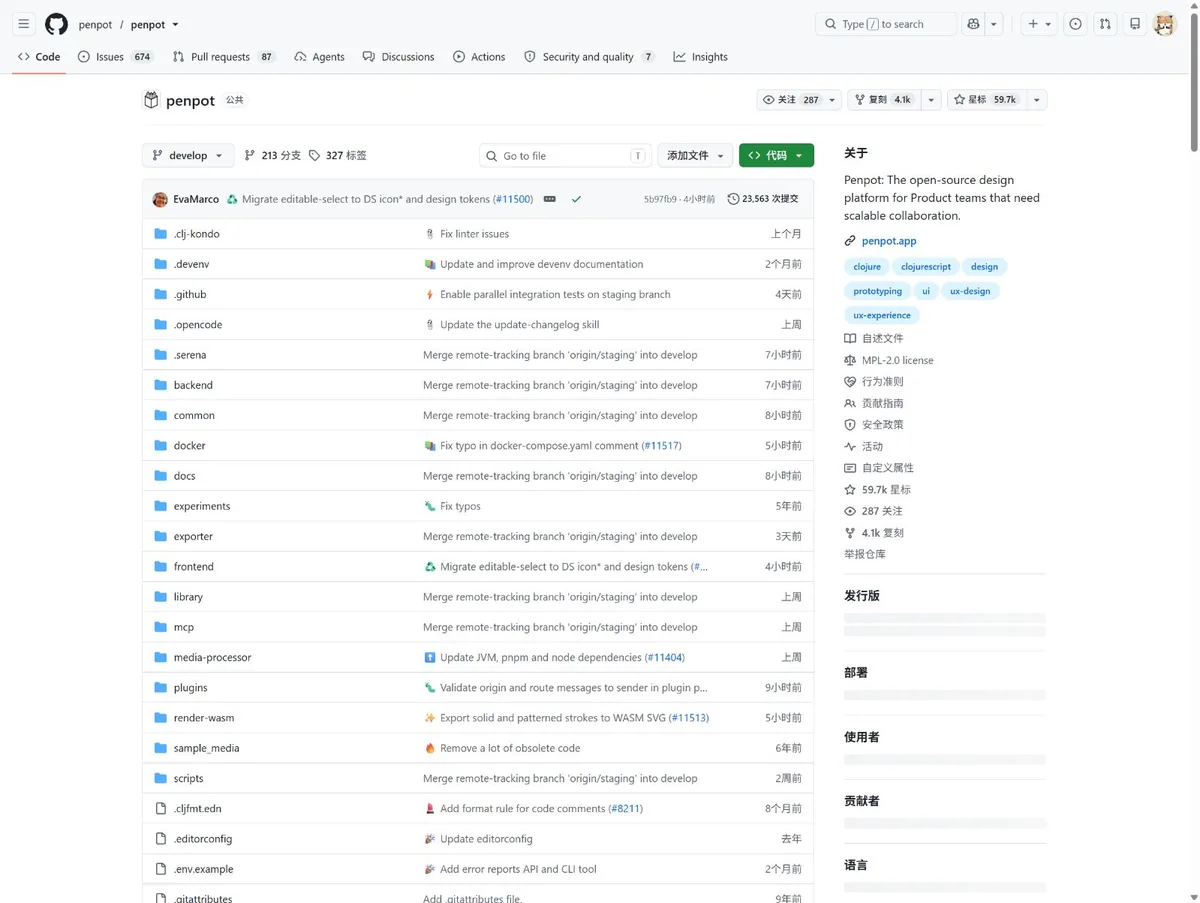
The platform offers vector drawing, layout, components, design systems, prototype linking, comments, and team projects. Browser access means design and review require one less client to install. Development mode helps engineers read design specs, reducing the back-and-forth that relies on screenshots and verbal explanations.
The fastest way is to sign up for the official cloud service. If you need to keep data in your own environment, you can self-host with Docker by following the official documentation. Deploying Penpot also involves database, file storage, email, domain, HTTPS, and upgrades. Teams should set up backup and recovery procedures before going into production.
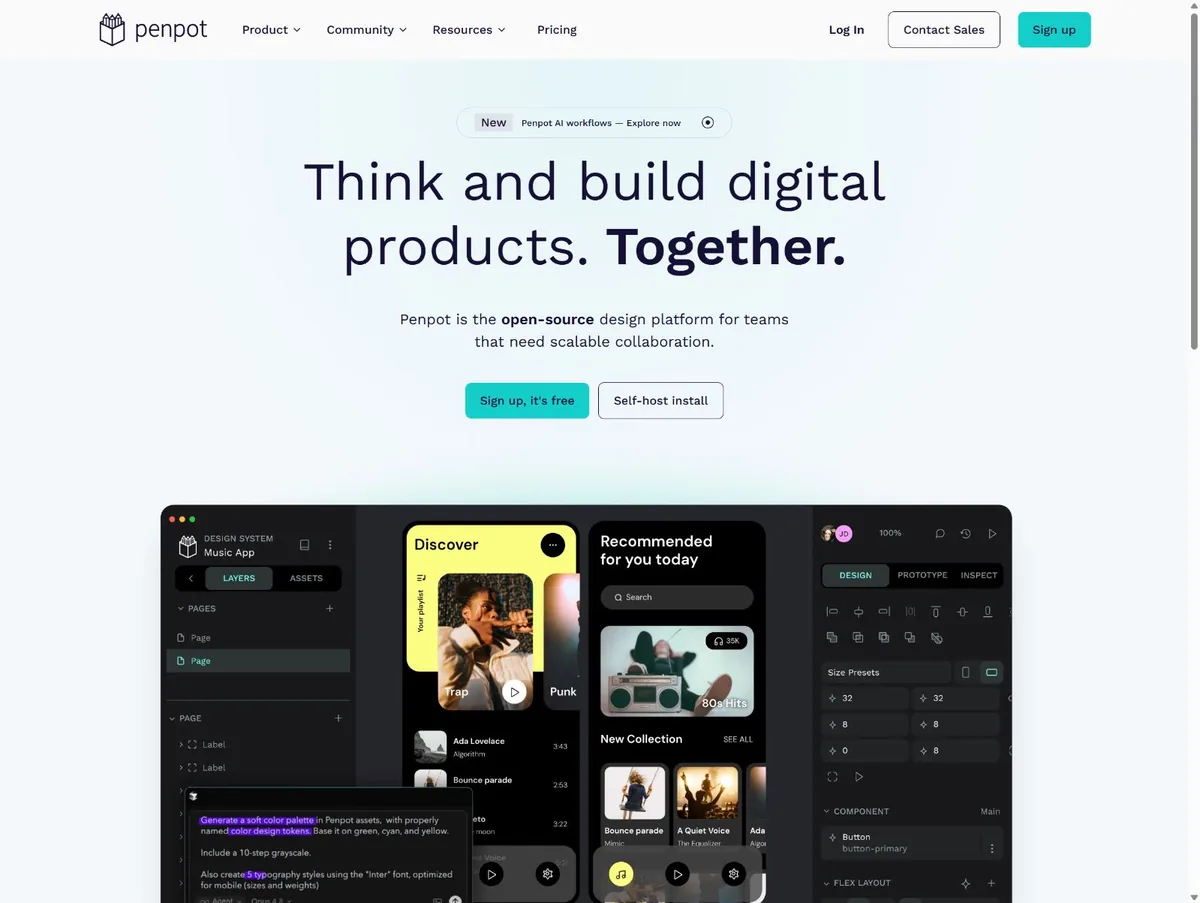
It suits collaboration on websites, app interfaces, interactive prototypes, and design systems. Open-source teams, educational organizations, and companies requiring private deployment will especially value its data control capabilities. When planning to migrate from another design platform, test fonts, components, layout, and handoff processes on a real project first—the results are more useful than a feature checklist.
Penpot’s code is licensed under MPL-2.0 and can be self-hosted for free. The official cloud service and commercial support may be charged separately. Self-hosting gives you more control, but also puts the responsibility for servers, security, updates, and availability on whoever deploys it.
The latest verifiable version is 2.17.2, released on August 27, 2026. Penpot’s design tools stay close to web standards, making developer handoff more intuitive. Whether a large team can migrate depends on how smoothly existing component libraries, plugins, and review habits can transition.