ContextMenuManager - v3.3.3.1
Windows right-click menu management tool ContextMenuManager

A personal, self-hosted scheduling project that continues from Cal.com community code.
Based on the hosting environment0 Already downloaded Mobile view
Cal.diy is a community-driven project under the official Cal.com GitHub organization. The original open-source repository has been renamed, and commercial/enterprise code has been stripped out, leaving a scheduling base that suits personal research, self-hosting, and further development. Installing directly with the Cal.com repository address from older tutorials makes this change easy to miss.
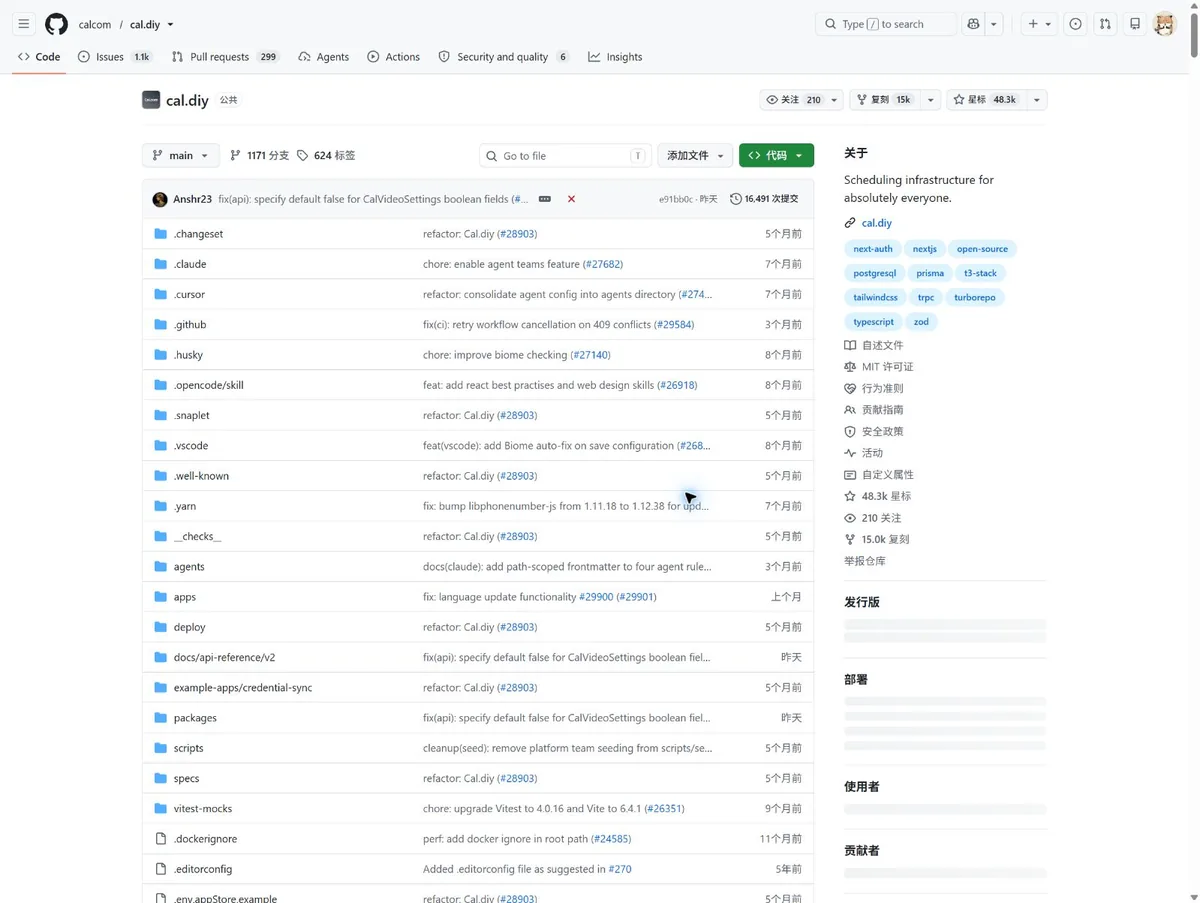
The project retains personal booking pages, calendar connections, and core scheduling capabilities, making it a starting point for studying scheduling systems or building a personal service. Enterprise features such as teams, organizations, analytics, workflows, and SSO or SAML have been removed, so it should not be understood in terms of the full feature list of the old Cal.com.
The official repository requires Node.js 18 or higher, PostgreSQL 13 or higher, and Yarn. Developers need to prepare a database and environment variables, then install dependencies and run the project as described. To use it as an internet-facing service, you will also need to configure a domain, HTTPS, email, backups, and monitoring.
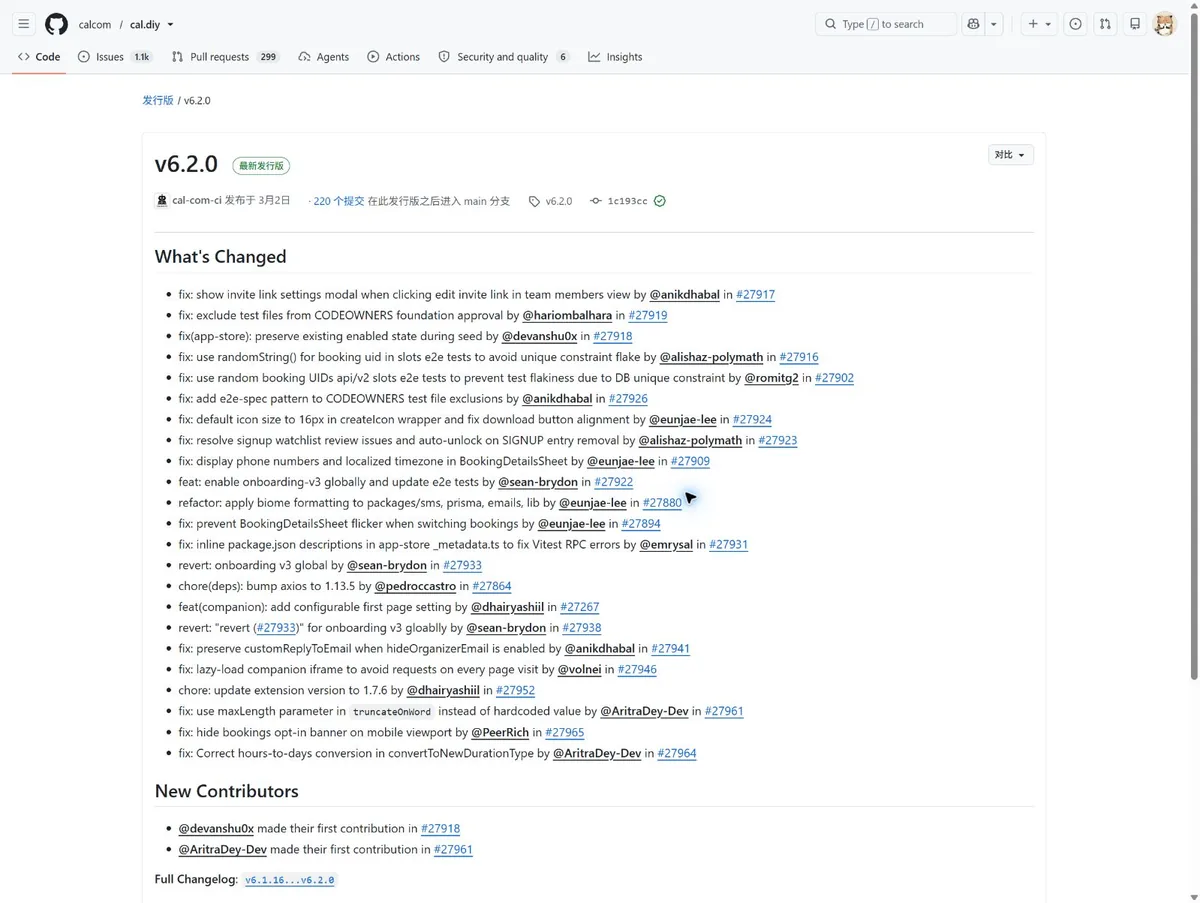
Cal.diy is suited to individual developers learning about scheduling systems, validating a self-hosting approach, or continuing further development. The official README explicitly recommends it for personal and non-production use. To provide stable service to a team or clients, test calendar sync, time zones, email delivery, and the upgrade workflow before deciding whether to adopt it.
The project is MIT-licensed, allowing free use, modification, and distribution. You are still responsible for servers, email, and operational maintenance. If you need teams, organizations, insights, automated workflows, or enterprise login, check Cal.com’s current commercial product; don’t expect Cal.diy to offer these removed modules.
The current verifiable version is 6.2.0, released March 1, 2026. Cal.diy offers the community a clearly scoped booking project with a permissive license. Its limitations are stated just as clearly: it targets personal and development use and is not suitable for production-grade booking without prior validation.