
VS Code - V 1.95.3
A code editor with a great writing experience.

A lightweight, privacy-friendly website analytics tool with a self-hostable Community Edition.
Based on Docker Mirror0 Already downloaded Mobile view
Plausible presents common metrics such as visits, referrers, top pages, country, and device on a clean dashboard. It emphasizes lightweight scripts and privacy protection, making it suitable for people who don’t want website analytics to become a complex data engineering setup. The company offers both a paid cloud service and a self-hostable Community Edition.
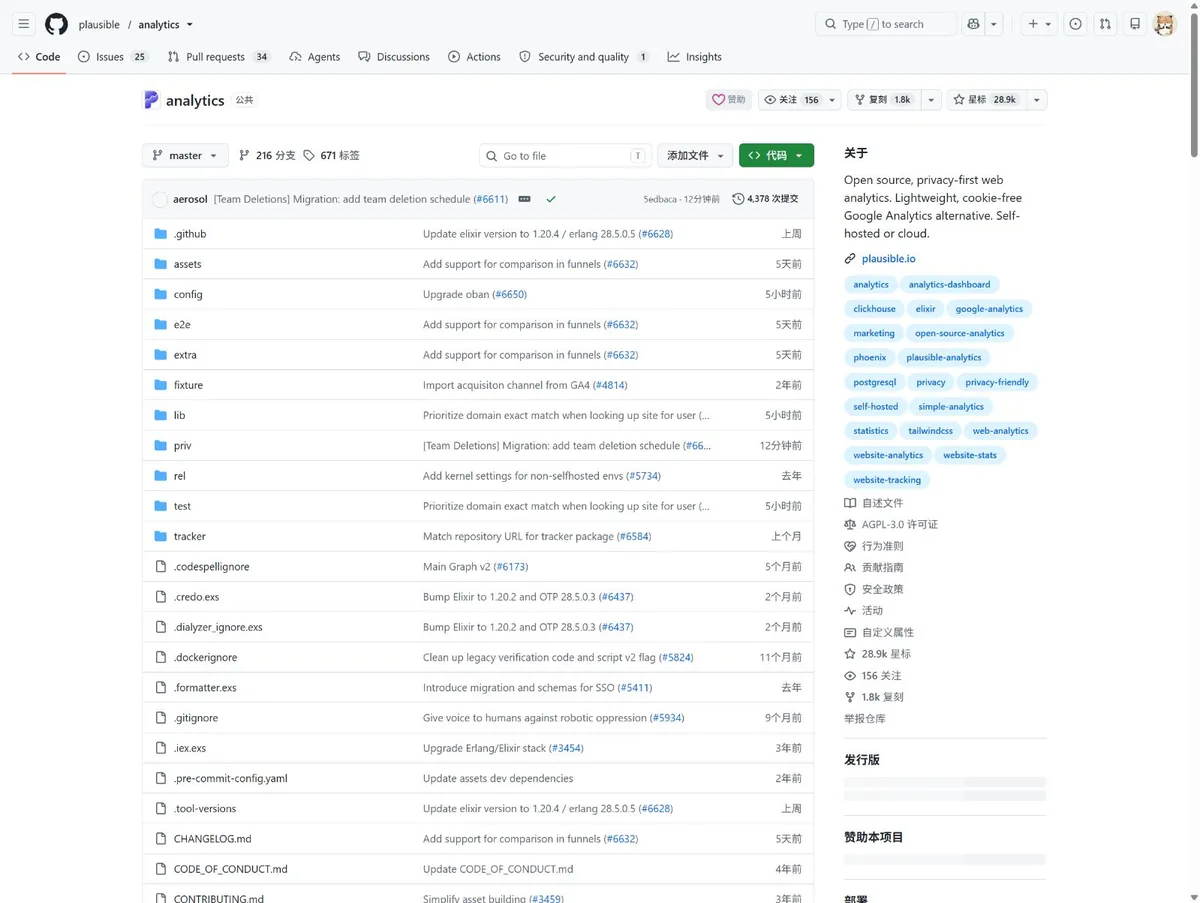
The dashboard provides real-time visitors, page views, traffic sources, goal conversions, and custom events. To set it up, you usually just add a single analytics script to your website. The data structure and interface are simpler than traditional analytics platforms, so you don’t need to build a lot of reports for day-to-day checks.
If you don’t want to maintain a server, you can use the official cloud service. If you want full control over your data and deployment, you can install the Community Edition with Docker by following the official docs. Self-hosters are responsible for updates, backups, security, and email configuration—these tasks don’t disappear just because the software is free.
The Community Edition retains core website analytics capabilities and receives updates roughly twice a year. The official cloud service includes more frequent updates, managed operations, and some advanced features. Capabilities such as funnels, e-commerce revenue, single sign-on, the Sites API, and more advanced bot filtering should not be assumed to be available out of the box in the Community Edition.
The Community Edition is released under the AGPL-3.0 license and can be self-hosted. Servers, domains, backups, and maintenance still involve real costs. The official cloud service is subscription-based and offers more peace of mind. Whether you should self-host depends mostly on your team’s ability to keep the service maintained.
The latest verifiable Community Edition is 3.2.1, released on May 15, 2026. Plausible’s strength is that its analytics path is short—you can see the key changes as soon as you open the dashboard. If you need complex user profiling, ad attribution, or a large-scale data warehouse, you may find that it doesn’t provide enough dimensions.