VS Code - V 1.95.3
A code editor with a great writing experience.

A visual workflow automation platform supporting hundreds of integrations, code nodes, and self-hosting.
Depending on the installation0 Already downloaded Mobile view
n8n uses nodes to connect triggers, application APIs, data processing, and conditional logic into workflows. Users can start from a visual interface and write JavaScript or Python when logic gets complex. The official repository lists more than 400 integrations, covering common forms, databases, notifications, and AI services.
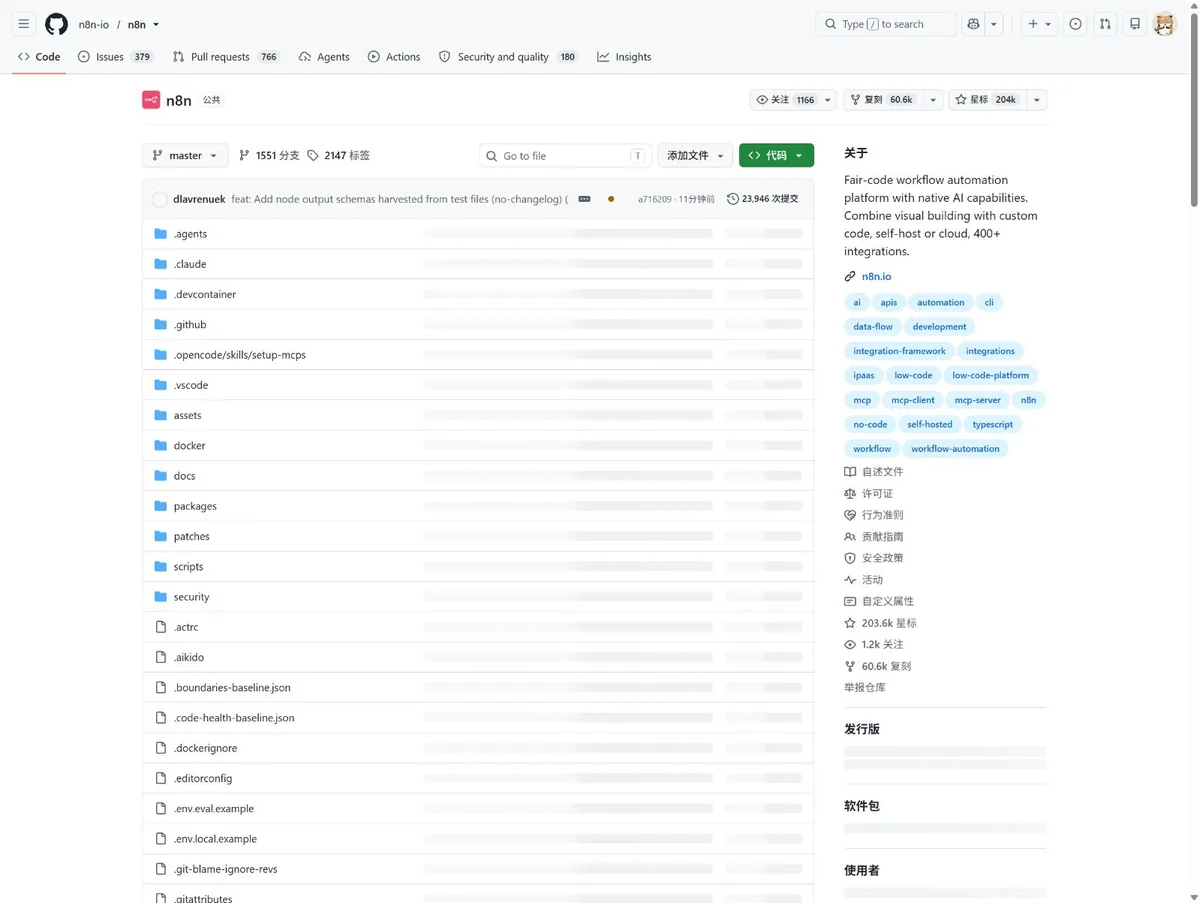
Workflows can run on a schedule and can also be triggered by webhooks, application events, or manual actions. Nodes read data, transform fields, call external APIs, and send results. Execution logs make it easy to locate failed steps, and self-hosting keeps credentials and business data in your own environment.
For quick adoption, you can use the official cloud service. Self-hosting is typically done via Docker or npm; production environments also need database, HTTPS, persistent storage, queues, and backups. Building the first workflow is not difficult, but real maintenance work comes from API changes, expired credentials, retries, and data quality.
It works well for lead syncing, content distribution, scheduled reports, ticket notifications, file organization, and AI processing chains. Personal and internal company workflows generally fall within the license. If you plan to offer it as a paid hosting service, a white-label product, or sell access to customers, you must first check the license’s commercial restrictions.
n8n uses the Sustainable Use License, which the team describes as fair-code. The source code is publicly available and allows personal, non-commercial, and internal business use, but it is not an OSI-approved open-source license. Offering paid hosting, white-labeling, or including n8n itself as part of a commercial product may require a commercial license.
The latest confirmed version is 2.37.11, released on September 7, 2026. n8n’s strength is mixing visual editing with code, giving complex workflows room to expand. As nodes increase, naming, error handling, credential rotation, and version management must keep up; otherwise, the canvas quickly becomes a production system nobody dares to touch.